
Aurora Near Explained: Why Northern Lights Sometimes Appear Close to You
In this article

If you have searched for “aurora near explained,” you are likely wondering why the northern lights sometimes appear much closer to your location than expected. Maybe you saw photos from places far from the Arctic, or you heard that an aurora might be visible near your city. This guide explains what auroras are, why they move, and how they can sometimes appear near you.
Core Idea: What an Aurora Is and Why It Glows
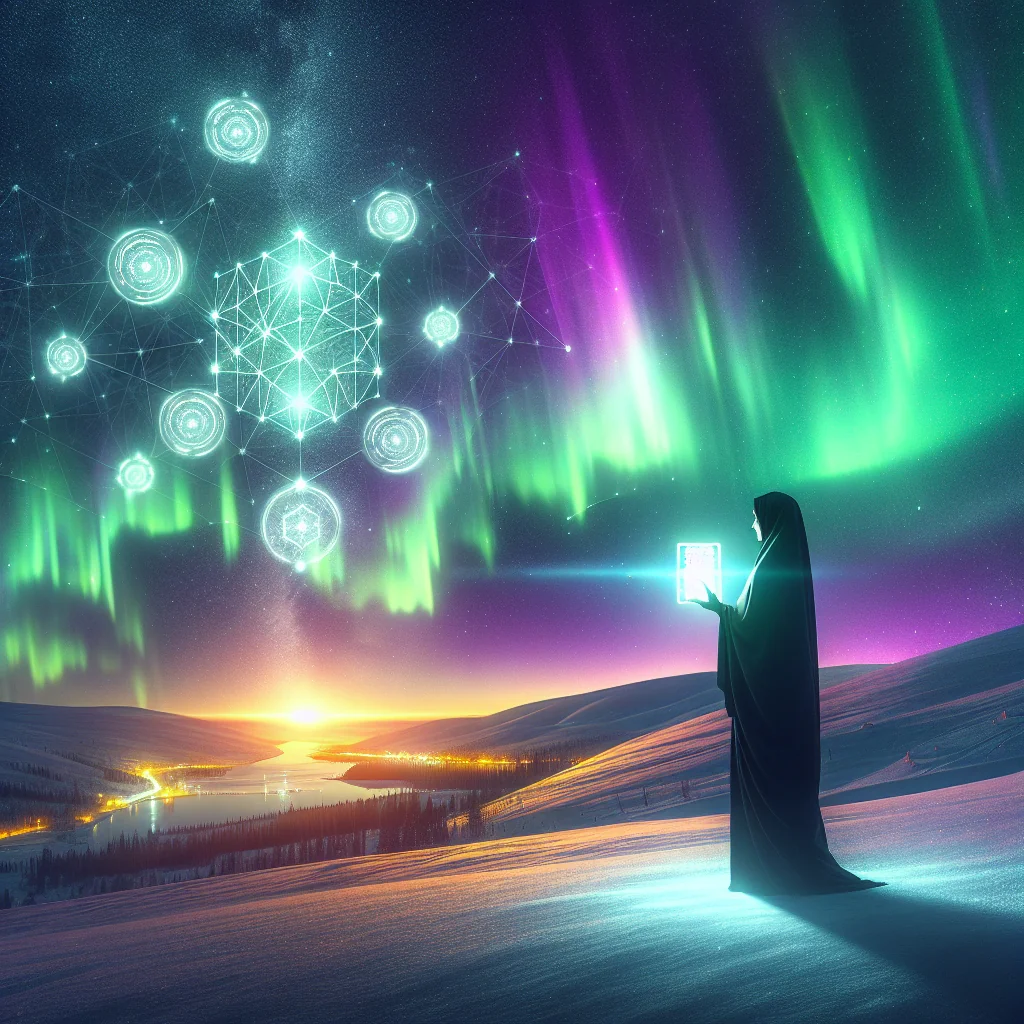
An aurora is a natural light display in the sky, usually seen near the polar regions. In the north, it is called the aurora borealis or northern lights. In the south, it is called the aurora australis or southern lights.
Auroras form when charged particles from the Sun hit gases in Earth’s upper atmosphere. These particles follow Earth’s magnetic field and collide with atoms high above the ground. The collisions make those atoms glow, which creates the shifting curtains and arcs of light you see.
The colors depend on which gas is hit and at what height. Oxygen can give green or red light. Nitrogen can give purple or blue light. Most people first notice the common green band, which is usually the brightest.
Blueprint Step 1: From Sun to Sky – How Auroras Form
To understand an aurora near you, you need a clear picture of how the whole process works. The chain starts at the Sun and ends in Earth’s atmosphere over your head, following a repeatable pattern that scientists track every day.
The Sun constantly sends out a stream of charged particles called the solar wind. Sometimes the Sun also releases stronger bursts, such as solar flares or coronal mass ejections. These stronger events send more particles and energy toward Earth and increase the chance of visible auroras.
When this stream reaches Earth, the planet’s magnetic field guides the particles toward the polar regions. The particles spiral along magnetic field lines and enter the atmosphere, where they collide with oxygen and nitrogen. The glow from these collisions is what you see as an aurora, whether it appears above the Arctic or surprisingly close to your home.
Blueprint Step 2: Why Auroras Usually Stay Near the Poles
Most of the time, auroras stay in an “auroral oval” around each magnetic pole. You can picture this as a ring-shaped zone, centered not on the geographic poles but on the magnetic poles that shift slowly over time.
Earth’s magnetic field is strongest and most curved near the poles. That shape funnels charged particles into those regions, like invisible rails in space. As a result, places such as northern Canada, Alaska, northern Scandinavia, and parts of Russia see auroras far more often than mid-latitude regions.
In the southern hemisphere, parts of Antarctica, southern New Zealand, and southern Australia are closer to the southern auroral oval. People there can sometimes see the southern lights on dark, clear nights, even from areas that are not strictly polar.
Blueprint Step 3: “Aurora Near” Explained – Reaching Lower Latitudes
The phrase “aurora near explained” often points to a simple question: why did the northern lights show up near my city, far from the Arctic? The answer lies in how large geomagnetic storms can stretch the auroral oval away from its normal zone.
During strong solar activity, more charged particles reach Earth and disturb the magnetic field. This disturbance is called a geomagnetic storm. A strong storm can push the auroral oval away from the poles and toward lower latitudes where auroras are rare in quiet times.
When this happens, cities that rarely see auroras can suddenly have a chance. People in central Europe, the northern United States, or even farther south might see a faint glow on the northern horizon, or sometimes overhead during very strong events. The same applies in the southern hemisphere for people living farther from Antarctica.
Blueprint Step 4: Key Factors That Bring an Aurora Close to You
Several conditions work together to make an aurora visible near your location. These are the main factors that matter most for observers away from the poles and help explain why some nights succeed and others fail.
- Strength of solar activity: Stronger solar storms send more particles and energy, which expand the auroral oval toward lower latitudes.
- Your latitude: The closer you live to the polar regions, the more often auroras will be near you, even during modest storms.
- Local time: Auroras are usually more active around local midnight, though they can appear earlier or later.
- Darkness and season: You need a dark sky. Winter and the months with longer nights give the best chances in each hemisphere.
- Clear skies and low light pollution: Clouds, city lights, and haze can hide weak auroras, especially at lower latitudes.
When these factors line up, an aurora near your area can move from a faint rumor into a real, visible display. Even a modest show can feel special in places where auroras are rare, because you know many pieces had to fall into place.
Blueprint Step 5: What an Aurora Looks Like at Different Distances
The same aurora can look very different depending on how close you are to the auroral oval. This helps explain why some people see bright colors, while others see only a pale glow that barely stands out from the background sky.
Near the center of the auroral oval, the lights may appear overhead as bright curtains, arcs, and rays. The movement can be fast, with waves and flickers across the sky. Colors can be vivid green, with reds and purples during stronger activity that excites higher layers of the atmosphere.
Farther from the oval, the aurora often sits low on the horizon. The display may look like a faint, greyish band or arch. Cameras can capture color that your eyes barely see. In many mid-latitude locations, a “near” aurora looks more like a soft glow than a bright, dancing curtain, especially for people whose eyes are not fully dark adapted.
Blueprint Step 6: Why Photos of Auroras Near You Look Brighter
Many people search “aurora near explained” after seeing social media photos that look unreal. The difference comes from how cameras and eyes work, not from any trick in the sky itself.
Cameras can use long exposures and high sensitivity to collect more light than your eyes can at one moment. This makes faint auroras appear brighter and more colorful in images. A greyish band to your eyes can look bright green and purple in a photo that gathers light for several seconds.
This does not mean the aurora is fake. The light is real, but the camera is better at collecting it over time. When you know this, you can set realistic expectations for what you will see in person and still enjoy the experience even if the colors look softer to your eyes.
Blueprint Step 7: Simple Checklist to Tell If an Aurora Might Be Near You
You do not need to be a scientist to guess whether an aurora might be visible near your location. You can follow a short, repeatable checklist that many sky watchers use before heading out at night.
- Check your latitude on a map and note how far you are from the polar regions.
- Look at a current space weather or aurora forecast from a reliable source.
- See whether the forecast mentions auroras visible farther from the poles than usual.
- Confirm that the skies will be clear or mostly clear during dark hours.
- Choose a viewing spot away from bright city lights with a clear horizon.
- Plan to be outside around local midnight, plus or minus a couple of hours.
- Give your eyes at least 20 minutes to adjust to the dark before judging the sky.
This simple ordered list of actions gives you a structured way to decide whether a trip outside is worth the effort. Over time, you will learn how strong a forecast needs to be for an aurora near your home to be likely.
Blueprint Step 8: Myths and Reality About Auroras Near You
Because auroras feel magical, many myths surround them. Clearing up a few common ones helps you understand what is really happening above you and avoid confusion when you read stories online.
One myth says auroras make sounds that people can hear on the ground. Most scientists agree that the light itself is too high and the air too thin for sound from the aurora to reach you. Some people report crackling sounds, but those reports are rare and not well understood by researchers.
Another myth claims auroras are dangerous to humans who watch them. For people on the ground, the lights are safe to look at. The main risks from strong solar storms involve satellites, power grids, and radio systems, not your health while watching the sky from a field or a backyard.
Blueprint Step 9: Safety, Technology, and Strong Auroras
While an aurora near you looks harmless and peaceful, the space weather behind it can affect technology. Strong geomagnetic storms can disturb satellite operations, radio communication, and power lines that span long distances across a country.
Engineers monitor space weather to reduce these risks. They may adjust satellite orientation, change communication plans, or manage power grid loads during strong storms. For most people, the main effect is a chance to see the lights farther from the poles than usual and the small chance of brief disruptions.
Knowing this helps you see auroras as part of a larger system. The same solar activity that gives a beautiful sky show can also challenge the technology people use every day, from satellite navigation to long-distance power transmission.
Blueprint Step 10: Planning Your Own Aurora-Near Experience
When you hear that an aurora might be near your area, a few simple choices can improve your experience. You do not need special gear, but some planning helps you get the most from a rare night.
Find a dark spot away from bright city lights, with a clear view of the northern horizon in the northern hemisphere, or the southern horizon in the southern hemisphere. Bring warm clothes, since aurora watching often means standing still at night for a while, and consider a red-light flashlight to protect your night vision.
Give your eyes time to adjust to the dark, and be patient. Auroras can brighten and fade in waves, and sometimes the show starts later than expected. Even a short, faint display is a rare sight in many places, and understanding the science behind an aurora near you makes the moment feel even more special.
Summary of where auroras appear most often and when they can reach near you:
| Region Type | Typical Aurora Visibility | Chance During Strong Storms |
|---|---|---|
| High latitudes (close to polar circles) | Frequent, often overhead on clear dark nights | Very high; bright and dynamic displays likely |
| Mid-latitudes (many parts of Europe, North America) | Occasional, usually low on the horizon | Good; aurora can move overhead during major events |
| Low latitudes (nearer the equator) | Rare, often not visible in quiet conditions | Possible during extreme storms as a faint glow |
This simple table helps place your location in context, so you can judge how likely an aurora near you really is. Combine this with the earlier checklist and factor list, and you have a clear, practical blueprint for spotting northern lights when they stray far from their usual polar home.